

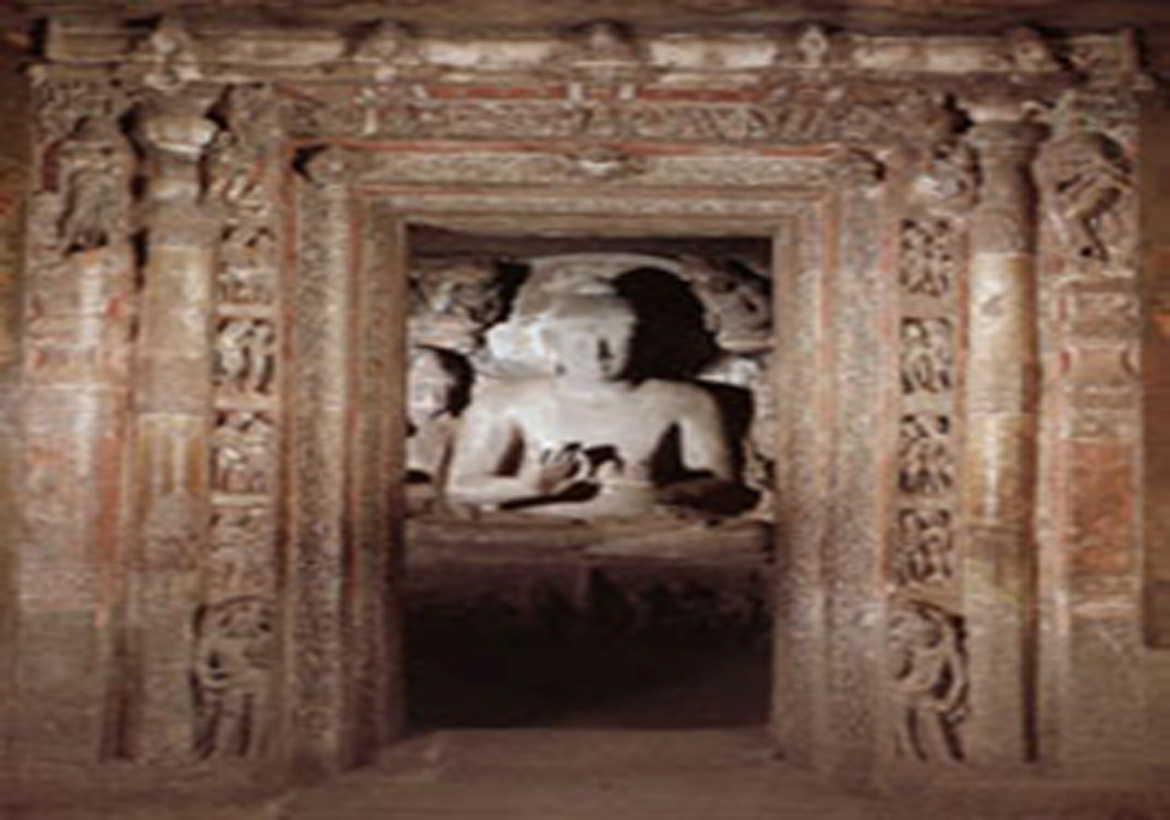
Jawahar Lal Nehru once said “Ajanta takes us back into some distant dream like but a very real past”.
Ajanta rock art is a combination of three arts – architecture, sculpture and painting. Buddhist monks excavated rocks to form these caves for praying, for meditation and for residing. The serene natural surroundings of the area made Ajanta an ideal place for Buddhist monks to seek the “path” and for artisans to carve monuments dedicated to the Lord Buddha.
The art of Ajanta caves is well known for its creativeness and artistic excellence. It is perhaps, the greatest art centre of the Gupta period Buddhist creative visual enterprises of India. Nowhere else at one place, is shown such a grand display of the three disciplines- architecture, sculpture and painting in a highly mature and technically perfect state. In the realm of painting it is almost unique and unparalleled in the contemporary world of art.
The importance of Ajanta in the history of Indian art is great. Any attempt to state it in precise terms would appear exaggerated and yet be inadequate. No other source including literature would be equal to it. A single picture of Ajanta can communicate the meaning better than a thousand words. It is a simple visual representation of Buddhist ideals and religious sentiments that are present in today’s world record of paintings in Asia.
At a quiet secluded spot, at the edge of the Deccan plateau and on the border of Khandesh, in an atmosphere that is at once serene and yet vibrant with the vitality of nature. There are 29 rock cut Buddhist temples and monasteries, forming a majestic semicircular amphitheatre. Ajanta caves were discovered by British soldiers in 1819.
The caves are in the form of a string of pearls around the waist of a mountain and are located near the source of river Vaghora near Aurangabad, a district town about 400 kms east of Mumbai. It turned out after some research that these were Buddhist monasteries. Soon after the discovery, the caves attracted attention of eminent archaeologists and art historians from all over the world.
Paintings in Caves 1,2,16, and 17 are not only beautiful, but are also a vivid record of life and the times in the fifth century.
Buddha
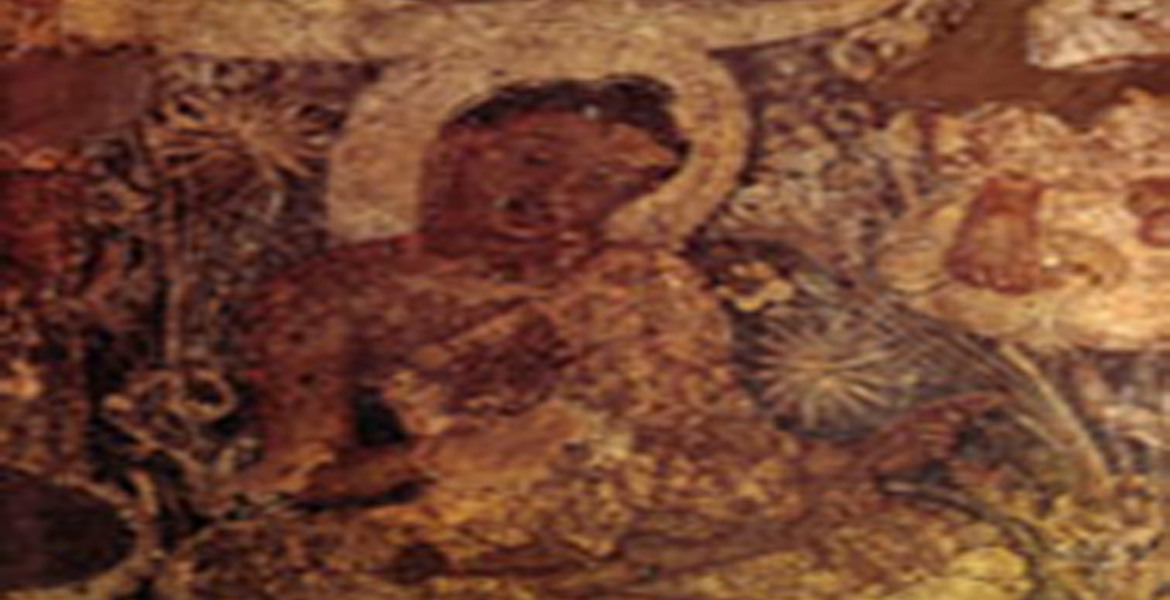
The rock walls of Ajanta are woven richly with the life of Gautama Buddha and Jataka stories and main incidents in Buddha’s life as recorded in Buddhist scriptures related to birth, renunciation and teachings that expounded the ethics leading to the final Enlightenment.
On the left side wall of Cave 2 scenes of the birth of Buddha are depicted. Mayadevi’s dream, a court scene showing an astrologer interpreting the dream, Mayadevi represented leaning against a pillar are some of the masterpieces paintings of Ajanta. The ceiling is decorative showing the impact of the Greeco-Hellennistic cultures on Indian life and culture.
The entire surface of the right side wall of Cave 16 bracketed by the two pilasters narrates incidents taken from the life of Gautam Buddha. But the paintings have suffered considerable damage. The paintings depict Maya’s dream, Asita’s prediction, Buddha as a child, and on extreme left Sujata offering kheer.
Below, is the ploughing festival and the wandering Buddha in streets. Other worth mentioning paintings are Buddha shown as preaching and above are two flying gandharas, conversion of Nanda by Buddha, his pathetic remorse and his ultimate journey with Buddha to the ethereal world.
The most beautiful painting is the dying princess, the hesitant and the sad messenger going to the grief stricken queen attended by other women.
Ceiling Decoration
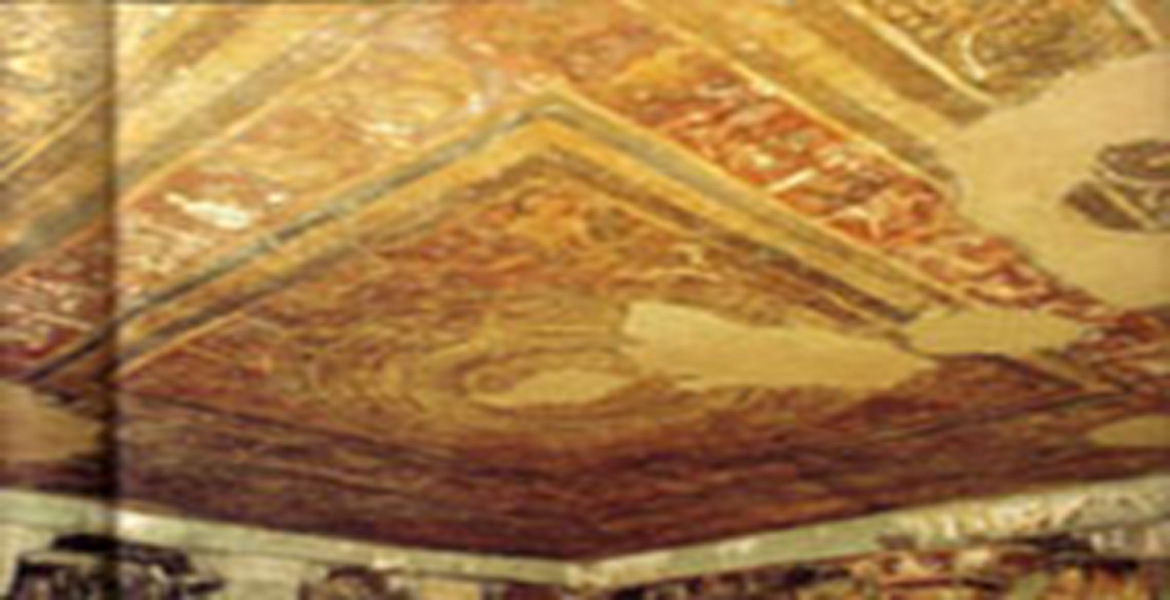
The ceiling of the interior of caves has faded with the ravages of time. The colours and fine brushwork of the beautiful patterns, motifs, designs and artistic figures painted on ceiling, among which some have survived. Paintings are decorative and are a symphony of colours.
Though paintings on the greater part of ceilings have perished, yet enough still remains to show at least their arrangement. Space in ceilings has been divided into a number of panels and compartments – square within square, rectangular enclosing smaller rectangular and concentric circles within squares. Panels are of different dimensions and are full of floral, geometrical and jewelry designs. Another equally cherished theme is squares and rectangular spaces of different dimensions placed next to each other, framed in narrow panels carrying key patterns or other geometric designs and used as a device for separating different areas.
There is a huge concentric circle enclosed in a square, with innumerable diminutive flowery bands within it, as are usually found in the center of the ceiling of main halls, antechamber and inner shrines. Roundels with concentric bands of variegated colors and patterns round a central lotus with gandharva figure or couples in the corners amidst clouds were a very common pattern of the ceiling decoration. This arrangement exists on ceilings of almost all vihars. These panels and circles are filled with ornament of ‘unsurpassed beauty showing fertility in designs’ delicate colouring, flow of line and filling of space in which naturalism and conventionalism are combined as to produce a pleasing and harmonious effect.
Ajanta Doorways
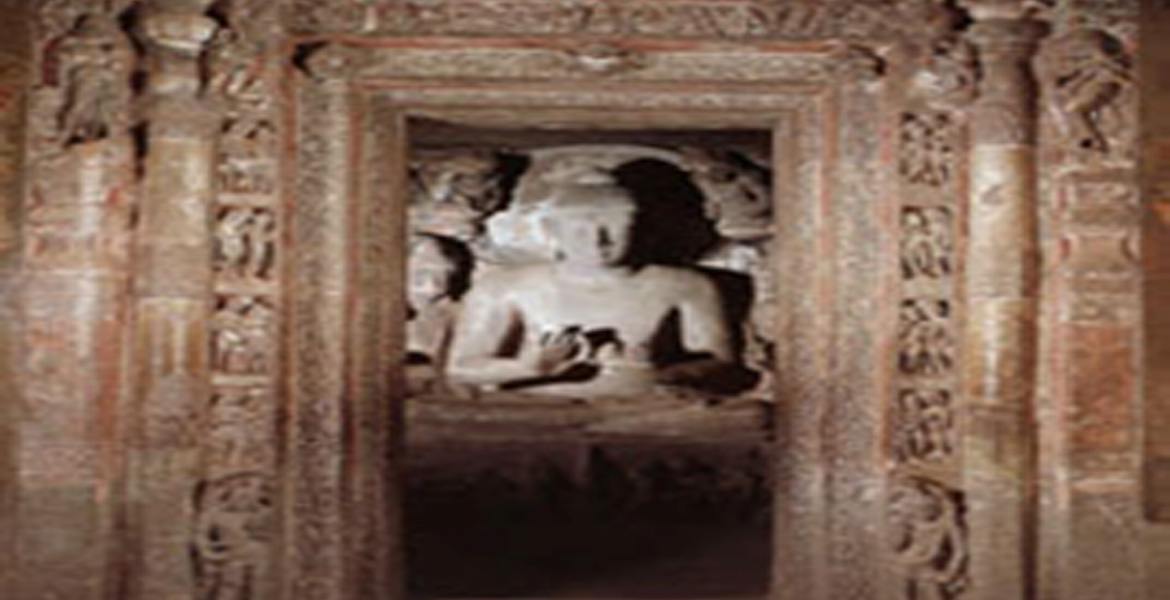
It is an age old custom/symbol of Indian culture to decorate in auspicious occasions or celebrations, the main entrance of the house with garland of flowers and fresh leaves of Mango tree or strips of cloth embroidered with bead work or appliqué. This decoration is called dwar torana. In temple architecture an impressive decoration with auspicious motifs and delightful embellishment are the torana or doorways.
The entrance to the wooden prakara of the Vedic period, the vahir dwar of amarakosha and the entrance gate of the Buddhist stupas mentioned in Buddhist literature describing the stambha, suchi and ushaursha and many other motifs including the garland bearer kinners etc.
Following this ancient tradition most of the caves in Ajanta have richly covered doorways. The early doorways of Mahayana period in Ajanta are very simple. In Gupta period (around 5thc.AD) lots of attention was given especially to shrine’s doorway. The main figure of Buddha has been given lots of attention.
So the doorway came to be profusely and excessively decorated. Porch and the shrine doorways are undergone constant development from simple to complex one. Most of the doorjambs in Ajanta are decorated with sculptural motifs. Two types of doorways are found in Ajanta caves – porch and, shrine doorways.
The doorway of a temple from early times has always surrounded with a special sanctity. Protective forces carved on the doorways supposed to guard it, and support devotees to help them to achieve their goal- moksha. This auspicious gate is beautifully described by Dr. Sprink “It was the Great Gate, from the world beyond to the world within, from chaos to order, from secular ground to terra sacra.” (Sprink, Ajanta to Ellora Marg )
On most of the doorways nagaraja or yakshas are stand at the doorway base, goddesses of the river Ganga and Yamuna presides above and on the lintels surfaces loving couples, eight Buddhas, dwarfs dancing or with garlands beautiful creepers or geometric panels beautifying doors. Nagas guard the entrance of the main hall and all shrine entrances. Yaksha shown as guardian on the doorways can be considered to be Bodhisattvas.
1. Porch and,
2. Shrine doorways
Jataka Stories
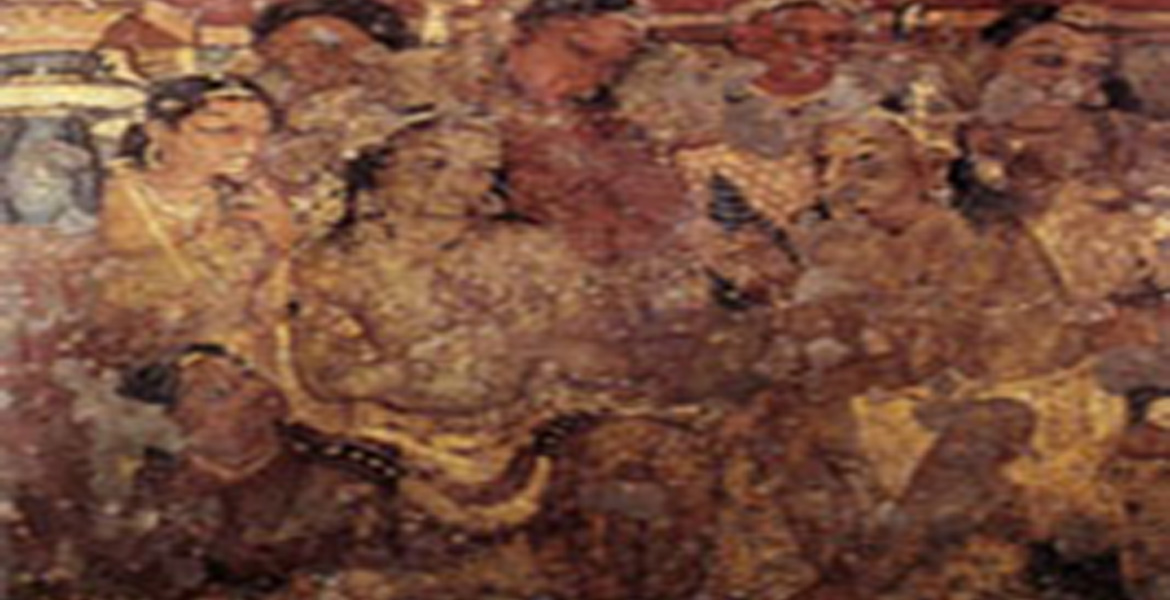
The large painted panels narrate stories of Buddha’s earlier incarnations. Buddha in his previous births passed through a circle of birth and rebirths on earth and that he would have to be born for the last in a place selected for his ultimate mission. The principal figure in these jataka stories is Bodhisattva. He is manifested a number of characters each representing an account of the previous life of Gautam Buddha.
Bodhisattva is a being of a divine order. His clear perception of good and evil comes out in the Jataka stories. Bodhisattva’s stature was far above others due to his supreme intelligence, nobility of character, selfless service and sacrifice, and, boundless compassion. It is said he was a personification of wisdom. In each of his incarnation he retains the bodily form that he has chosen for himself. When he is born in the frame of a man he is the superman among men. Scholars have studied and identified about a dozen of Jataka stories on the walls of Ajanta. They are narrated beautifully in six caves. The names of the Jataka stories are as follows:
- Cave1 Samkhapala, Mahajanaka, Maha-Ummaggaand Champeyya.
- Cave 2 Kshanti, Hansa, Vidhurapandita, Ruru.
- Cave 6 Miracle of Sravasti,
- Cave 10 Sama, Chhaddanta.
- Cave 16 Hasti, Maha-Ummagga and MahaSutasoma.
- Cave 17 Vessantara, Chhaddanta, Mahakapi, Hasti, Hansa, Mahasutasoma, ura bhamiga, Machchh, MigrodhamigaJataka
Ajanta Pillars
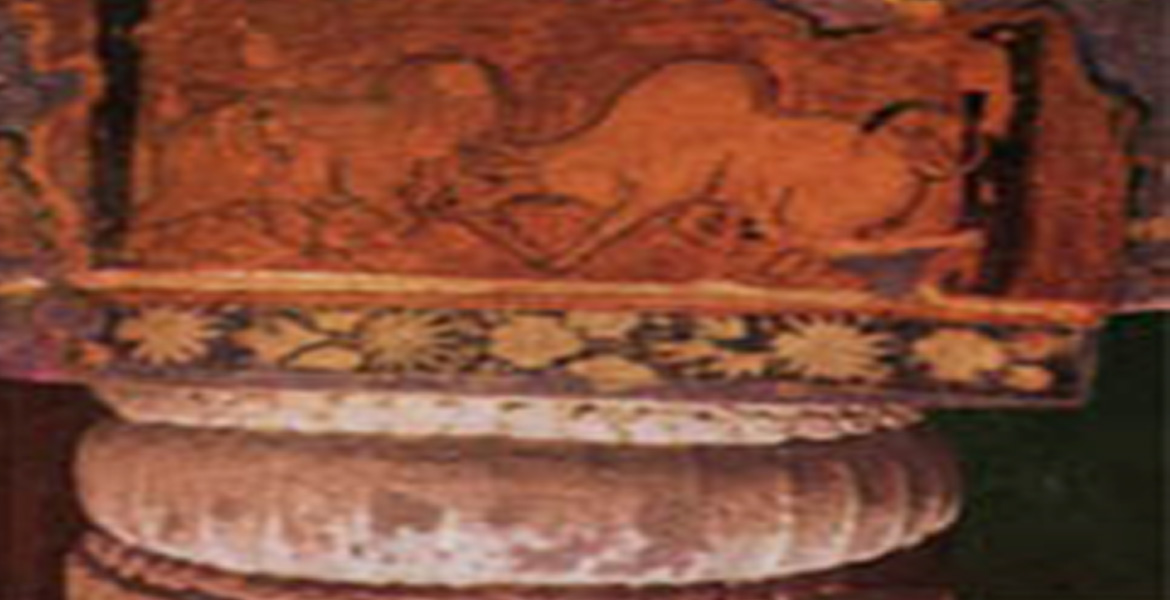
In early caves in Ajanta the pillars were just to support ceiling of the cave. In later stages they became more and more decorative. Some pillars were initially painted with designs or figures of Buddha and some are carved with floral, geometric and other motifs like dwarf holding pillars or with musical instrument.
The remains of the painted pillars are found in four caves. These are Caves 2, 9, 10, 17 and 26. Base of almost all pillars are painted with yaksha, nagas, and ganas. In Cave 2, base of the pillars contain gana couples, yaksha with chauri or yakshi with attendants, devasuram and some more auspicious motifs. Paintings defy the general concept of cave decoration which foresaw of ganas accompanying the visitor on his way to the image of Buddha.
On a shrine pillar base in Cave 2 shows Buddha preaching while sitting on a lotus. It seems that the painting was not a part of original plan for the decoration of this cave. It appears from an inscription that the painting was provided by a donor.
Cave 9 and Cave 10 columns are painted with Buddha figures. Pillars in these old caves were painted around 5th c AD. In both caves, Buddha is either seated or in standing postures. In one painting of Cave 10, Buddha is seated beneath a tree. Bodhisattva is standing in front of him and a devotee is also seen.
The paintings on pillars in cave 16 are totally gone. Only glimpses are found in some places In Cave 17, the base of the pillars and pilasters are decorated with gana, mythical animals, Yakshi and symbols of good luck and fertility. Columns are painted with floral and geometric designs. Today paintings are in a bad condition.
Ajanta Sculpture
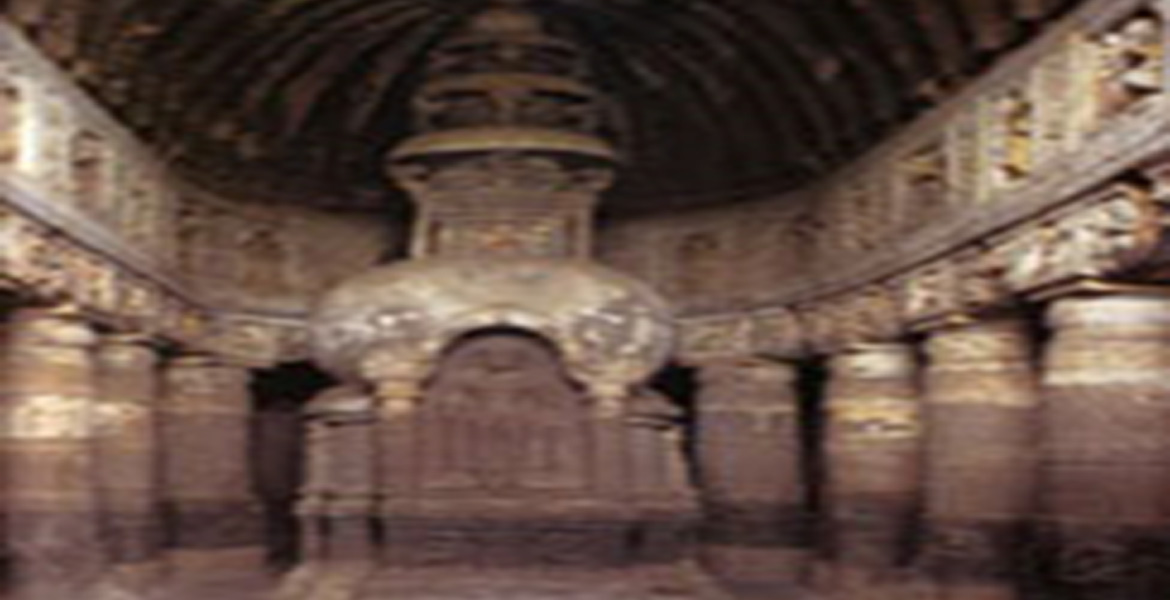
The sculpture in Ajanta caves possesses a certian amount of exellence. It gives us a picture of development of plastic art in Deccan. In sculpture the figures of Buddha, Bodhisattvas, Kuber, from Buddha’s life are seen carved. The kinship between painting and sculpture that we find in Ajanta is unique in the history of world art. The blending achieved must have been astonishing when stone carving were bedecked in colour, falling the line with the hue and colour scheme of the murals.
Carving and images on façade and pillars are beautiful examples of an architectural unity of architecture and sculpture. The early façades are simple. But during the Gupta period facade were also become a part of decoration. The carving on pillars and pilasters, the rows of chaitya arches framing faces of yaksha, scrolls of foliage in horizontal bands were introduced on the façade show architectural features. The highly ornate façade in Ajanta is in Cave 19. It is a wealth of sculpture of the classical period. The figures of Kubera on either side of the chaitya window, Buddha with Yashodara and Rahul at the gate of Kapilavastu, naga figures and figures of women are all masterpieces of sculpture of this façade.
In earlier Caves pillars are simple and are merely octagonal. They were just to support the ceilings of the cave. In Caves 4,9,10,16,17, the pillars gradually becoming decorative. The plain octagonal pillars gradually modified in stages in each Cave and by the time some of the last Caves like Cave 21 and Cave 2 are carved, they become extremely decorative